.png)
Choreographing a Season: How the Dallas Stars use CUE
Most teams run activations. The Stars run a timeline. Every fan, in the building and at home, moving through the same experience at the same moment.
There is a version of fan engagement where a team buys a product, runs it at a set point in the show, and moves on. It works. It is also not what the Dallas Stars do.
The Stars treat the CUE Platform as one instrument rather than twelve. They started with six products in 2023 and now run the full platform, but the number is the least interesting part. What matters is that almost none of these products are being used only the way they were originally designed.
And no two nights look the same. With all the products in hand, the Stars are not running one set of activations on repeat for a full season. The mix changes. Which products show up on a given night, and how many, is a call they make game by game rather than once in September.
That is the part most teams never get to. Running one activation well is a project. Running a different combination night to night, across a whole season, is a system.
The timeline starts when doors open
Most teams start their fan engagement at puck drop. The Stars start theirs in the concourse.
Real-Time, an operational mode built into the CUE Platform, is the spine of the whole operation. Rather than firing products one at a time when there is a gap in the game, the Stars build a running timeline that fans move through together. Everyone sees the same thing at the same moment. When a fan opens PostUp , it opens inside the timeline, and when the moment ends the timeline carries them to what is next.
- Doors open: The timeline is already live before anyone reaches their seat. Fans who scan early are part of the night from the first moment.
- Pre-game: Six predictive questions before the puck drops. Which team scores first, most shots on goal, most saves. The poll locks when play starts.
- In play: PostUp, Fanatic Filters, FanSee, and the night's themed activations, swapped in and out of the timeline as the game gives them room.
- Intermission: The Zamboni race runs on the videoboard while Polling Mania runs the fan vote on their phones. Two products, one moment.
- All Season: Every point earned rolls into daily, nightly, and season-long leaderboards.
Real-Time takes real effort to strategize and execute, but once it is done, it makes the game presentation production flow seamlessly for fans and operators. While most teams are still thinking in one-off activations, the Stars built their entire game presentation around one goal and one platform that they can run effortlessly while maximizing the overall impact and return.
.jpeg)
One product, multiple ways
PostUp is the Stars' default product. It is also the clearest example of how far they push a single tool.
On a given night it is not one activation, it is several. A general fan photo board. A sponsor-specific board with its own layout and branding. And an AI photo activation rebuilt for that night's theme, so fans are not picking from four standard photo options. They are turned into bobbleheads, launched into space, or transformed into magical creatures.
The Stars like to explore how one product can be used in multiple ways. What they found has been worth real money. Each variant carries a different sponsor, which means one product on a contract line becomes multiple sellable assets for a sponsorship team.
Prizes as a creative problem
Every team gives things away. The Stars turned the giveaway itself into an experience.
The virtual t-shirt tosses and the Whataburger toss run through On-Demand, an operational mode that runs on its own without the need for an operator, allowing fans to play at any time rather than when directed to. Inside the timeline, they fix something every arena lives with. A real toss reaches the first few rows. A virtual one reaches the whole building. Fans in the lower bowl do not have to catch anything, and fans in the upper bowl get the same shot at a prize as the people on the glass.
AR Prize Drop works on the same logic. If you cannot or prefer not to put people in the rafters to drop prizes to the crowd, drop them virtually and let the whole building hunt for them through their phones.
The season-long score
The piece nobody else runs as effectively as the Stars is a season long Fan Leaderboard.
Points accumulate from the first game of the season to the last horn. Daily boards, season boards, and a separate board for the broadcast audience. Fans finish a season with tens of thousands of points, and the engagement time behind those totals is unlike anything else on the platform.
That is what converts a set of one-off activations into a reason to come back. A fan who plays on a Tuesday in November is protecting a position they have been building since October to win one of the exclusive Stars prizes.
Nobody watches from the outside
The hardest challenge the Stars set for themselves was the fan who is not in the building.
Stars Play to Win turns on at puck drop for every game, home and away. Fans at home check in via the web, play the predictive poll, and earn points into the same season standings as the crowd in the arena. For away broadcasts the Stars built a dedicated version, tuned to what makes sense on a couch rather than in a seat.
The design constraint was specific: the at-home fan should not be handed a watered-down copy of the in-venue show, and should never feel like they missed the real thing. Two audiences, two experiences, one scoreboard.
Where it landed
Hundreds of thousands of fans have played across the partnership, and they have taken home more than 105,000 prizes.
This is not a sweepstakes where a few people win and everyone watches. Close to seven prizes go out for every ten fans who pick up their phone. That is precisely why fans keep scanning.
Every one of them arrived through a scan the Stars own, which means the data behind those fans belongs to the team.
What they actually built
Everything above only scratches the surface of a given season with the Stars. But take out the product names and a method shows up.
The Stars Method:
- A timeline, not a schedule. Real-Time turned a list of activations into one continuous, choreographed experience that every fan moves through together, from first scan to the final horn.
- A lineup that is flexible. Which products appear, and how many, changes game to game.
- Every product asked to do more than one job. PostUp became multiple sellable assets in a night. Polling Mania became Shippy Spins, Victory Points, and Stars Pick'em. Tap It and Polling Mania run at the same moment, one on a phone and one on the videoboard.
- Prizing treated as a creative problem. A t-shirt toss nobody has to catch. A burger toss nobody has to throw. Prizes dropped into an arena, and nobody needed to go into the rafters. More than 105,000 prizes delivered in ways the products were never specifically built to deliver them.
- A score that never resets. Leaderboards tie every one of those moments to a season-long total, so a poll in November is worth something in March.
None of those four ideas required a product that did not already exist. Every piece is available to any team on the Platform. What the Stars did differently was refuse to accept the default use for any of it, and then asked every season, what else could we do with the Platform.
That is the difference between buying fan engagement and working with a company who can make the Platform work for you.
The part you cannot put in a contract
In July 2026, a marketing director at Oral Roberts reached out the CUE. He had researched fan engagement vendors and recognized the platform immediately. Not from a conference, an ad, or a referral.
He recognized it from going to a Dallas Stars game.
That is what happens when a partner stops asking what a product does and starts asking what it could do.
Seeing it from the inside
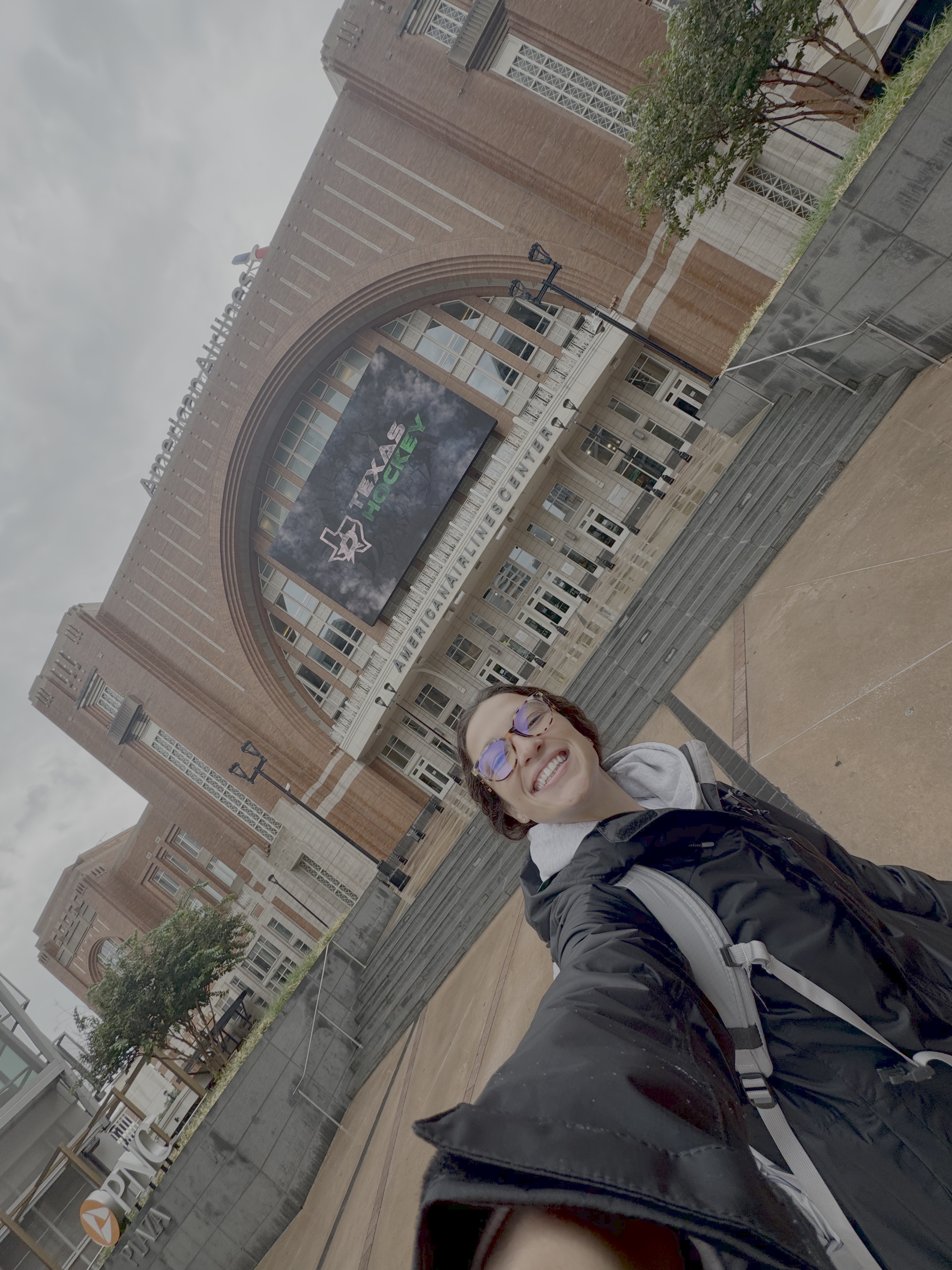
Recently, Jensen Blassage, director of client success at CUE, was on site for the Stars' home opener. She manages the account the rest of the year from a screen.
You can learn a lot about a team by looking at their account, but seeing it all come to life in the venue is a completely different experience. The Stars move incredibly fast, execute at a high level, and are constantly finding new ways to push our products further. That's exactly the kind of partnership we love, and it was great to see it all firsthand.
Choreographing a Season: How the Dallas Stars use CUE
.png)
Find Your Player at the 2026 AIG Women's Open
.png)